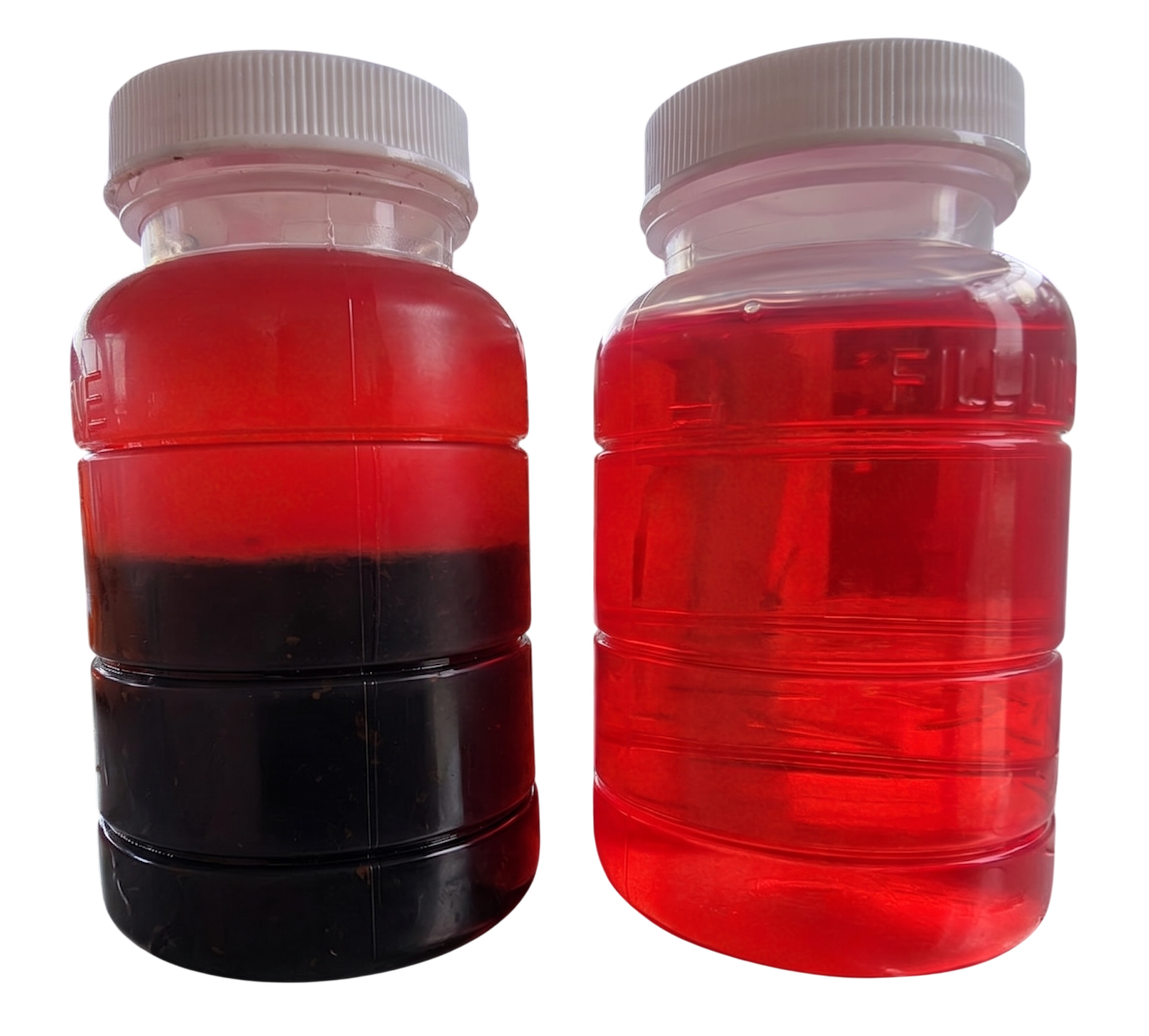
At FOPCO, we protect your critical backup generators and vehicle fleets from the costly financial risks of bad fuel. Over time, stored fuel naturally breaks down, creating thick tank sludge and dangerous bacterial growth ("diesel algae"). Left untreated, this dirty fuel leads to clogged filters, ruined engine components, and sudden power failures when you need it most.
To stop these breakdowns before they cause expensive downtime, our expert teams follow a proven, three-step preventative process: fluid sampling, deep-tank testing, and high-velocity filtration loops.
This process delivers the ultimate FOPCO solution: an advanced program that uses patented, natural enzymes to safely dismantle fuel contaminants, aligns your equipment with clean air standards, and filters out debris down to a microscopic 1 micron. By completely outperforming standard systems, we guarantee strict regulatory compliance and absolute engine reliability.
Static storage environments introduce constant environmental variables that compromise fluid reliability. This graphical pipeline tracks how common storage contaminants translate directly into critical system failure points if left unmitigated.
Diesel and gasoline compounds naturally decay over long storage cycles, stripping thermal output and inducing poor performance.
Emulsified condensation and thick organic residue fall out of suspension, gathering directly onto the bottom of storage cells.
Microbial spores grow rapidly within the fuel matrix while structural oxides and rust form on exposed internal metal borders.
Abrasive particulate matter and rapid water expansion trigger tearing and spray-tip erosion across precision assemblies.
Dense biological mass ("diesel algae") and heavy fuel sludges break free to choke filtration networks.
Sudden generator or fleet breakdown during peak demand operations, causing expensive, unrecoverable facility downtime.
We pinpoint contamination before it becomes a failure, executing targeted depth profile checks and full chemical laboratory analysis.
We strip away performance-robbing debris utilizing high-velocity closed loops to flush out accumulated particulate structures.
We polish your diesel down to a microscopic 1 micron, breaking down moisture and lifting fuel back into strict compliance parameters.
High-velocity conditioning modules strip contaminants to a strict 1-micron threshold, far outperforming standard 25-micron bypass systems. This deep processing ensures that microscopic sediments are permanently caught before reaching the engine.
Advanced petroleum-distillate carriers deploy specialized protein structures that bind directly to fuel molecules. This completely alters the cellular composition of organic contaminants, cleanly dismantling water, fungus, and algae matrices.
By completely purging unburned engine deposits and maximizing combustion consistency, downline exhaust smoke is substantially lowered. This provides older fleet infrastructure with clean operation parameters that align with rigid state standards.
We combine advanced protective tech with certified field protocols to ensure a zero-spill, completely secure cleaning process on your property.
Our cleaning systems run in strict harmony with modern environmental guidelines, keeping your facility completely safe and code-compliant.
We lock heavy-duty secondary containment shields around every fuel line hookup to completely eliminate any risk of soil or ground spills.
Our pressurized, closed-loop machinery seals off fumes, stopping fuel vapor evaporation leaks completely during processing.
Every field specialist on your site is individually certified and continuously trained to safely manage large-scale commercial storage tanks.
Some storage configurations demand a fresh start that goes beyond basic filtration loops and chemical treatments. For containment cells requiring a total restoration reset, FOPCO offers an absolute tactical tank purge and cleaning workflow. Our recovery process is proven 100% reliable across all heavy tank dimensions and is fully compatible with standard commercial fuel categories, including: Clear Diesel, Red Diesel, Renewable Diesel, Amber Fuel, Jet Fuel, and Gasoline.
Fuel RecoveryAll salvageable fuel assets are carefully drawn from the tank housing and transferred safely to a temporary mobile storage truck.
Sludge & Waste EvacuationAll residual bottom waste elements, including dense biological sludge, stale water layers, rust, and heavy sediments, are completely extracted.
Triple-Rinse Power WashingThe empty cells undergo a rigorous high-pressure Triple Rinse power wash treatment, and all dirty industrial wastewater is thoroughly drawn out.
Vacuum DehydrationThe freshly washed internal storage tank environment is completely dried utilizing high-lift professional vacuum extractors.
Restoration & ConditioningThe salvaged fuel is polished down to 1 micron back into the clean cell and treated with our patented natural enzyme formulation.
Disposal DocumentationAll hazardous chemical waste is transported securely to a licensed facility, and comprehensive compliance manifests are provided to the client.
Emergency power systems demand absolute fuel reliability when grid infrastructure fails. FOPCO specializes in comprehensive, custom preventative maintenance programs engineered to halt fuel degradation, prevent contamination growth, and satisfy rigid annual compliance metrics. Our tailored management programs guarantee that your standby investments remain entirely optimized and ready for immediate engine response.
Scheduled high-velocity filtration conditioning loops connect directly to your storage asset, actively flushing out accumulated condensation moisture, dense chemical sludges, and micro-debris down to a crisp, 1-micron threshold.
Continuous, baseline depth-profile fluid collections map core environmental changes, proactively tracking fuel quality anomalies and chemical safety shifts long before symptoms impact combustion parameters.
Complete data logging validation tracks fluid stability matrices and active enzyme degradation responses over time, providing comprehensive testing updates and consultative safety follow-ups.